
Still not quite convinced that Teeth Whitening will work on your teeth? You're not alone. Almost everyone who sits down for their first appointment arrives carrying the same quiet worry that their teeth are somehow "too far gone," too stained, too stubborn, or simply different from the bright smiles they've admired in other people's photos. It's a fair concern, and an honest one. Nobody wants to pin their hopes on a change that never actually shows up.
So let's set the hoping to one side and look at the evidence instead. The purpose of this page is a simple one: to show you what real Teeth Whitening results look like, before and after, and to explain the how and the why behind them in plain language. If you're looking for a real example of what a transformation can look like, you can see LA Teeth Whitening coventry Results. By the time you reach the bottom, the mystery should be gone. You'll know how the improvement is measured, what causes the staining in the first place, what actually happens during treatment, and most importantly whether the kind of transformation you've seen in other people is realistic for you.
No exaggeration, and no wild promises. Just a clear, grounded look at what's possible when years of everyday staining are gently lifted away.
How the change is actually measured
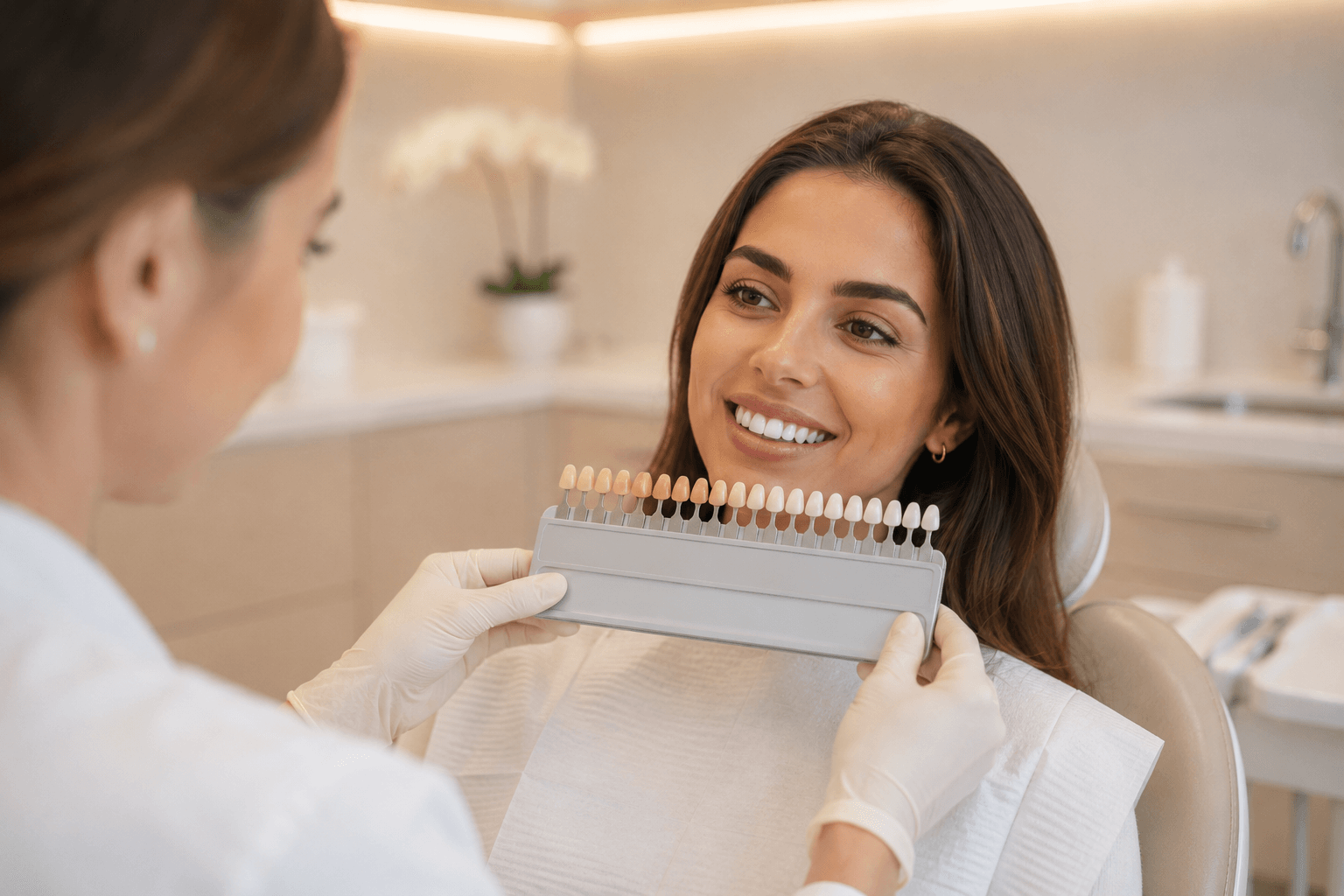
Before we get to the photographs, it helps to understand how a genuine improvement is measured, because the word "brighter" on its own doesn't tell you very much at all.
Dental professionals use something called the VITA shade guide. It's a small physical set of tabs, each one printed with a slightly different shade of tooth, arranged in order from the darkest and most yellow through to the lightest and brightest. Your natural shade is matched against the guide at the very start of your appointment, and then again at the end. If you'd like to see the treatment cost and pricing details, you can visit https://coventry.lateethwhitening.co.uk/teeth-whitening-price/. That gives you a clear, honest before-and-after reading rather than a vague impression that your smile "looks a bit better."
Most people move somewhere between four and twelve shades lighter in a single visit. Where exactly you land depends on several things: what you started with, the kind of staining you have, the condition of your enamel, and how your teeth respond on the day. Any professional worth their salt will be straight with you about this from the outset, rather than promising a specific number they can't guarantee.
What matters is that the difference isn't left to guesswork. It's measured against a recognised standard, it's visible, and it's something you can see with your own eyes in the mirror before you leave the chair.
Why teeth lose their brightness in the first place
To understand what Teeth Whitening does, it helps to understand what it's undoing.
Nobody is born with dull teeth. The brightness fades over time, and it's usually the result of everything we eat, drink, and do over the course of years. Some of the biggest culprits are the daily pleasures most of us wouldn't dream of giving up — coffee, tea, red wine, dark fruit juices, cola, curry, and richly coloured sauces. Each of these leaves a faint deposit behind, and while a single cup or meal makes no visible difference, thousands of them stacked up over a decade certainly do.
Smoking is another major factor. The tar and nicotine in cigarettes cling to enamel and gradually work their way into it, producing a yellow-brown discolouration that tends to be more stubborn than the staining from food and drink alone.
Then there's simple age. Enamel naturally thins as the years pass, and as it does, the darker layer of dentine beneath shows through more clearly. That gives teeth a more yellow appearance even in people who've never smoked and rarely touch coffee.
Certain medications, past illnesses, and even the mineral content of the water in some areas can play a part too. The point worth holding on to is that dull, discoloured teeth are rarely a sign that you've done something wrong. For most people, it's simply the visible record of an ordinary life, gradually written across their smile.
Understanding the stains on your own teeth
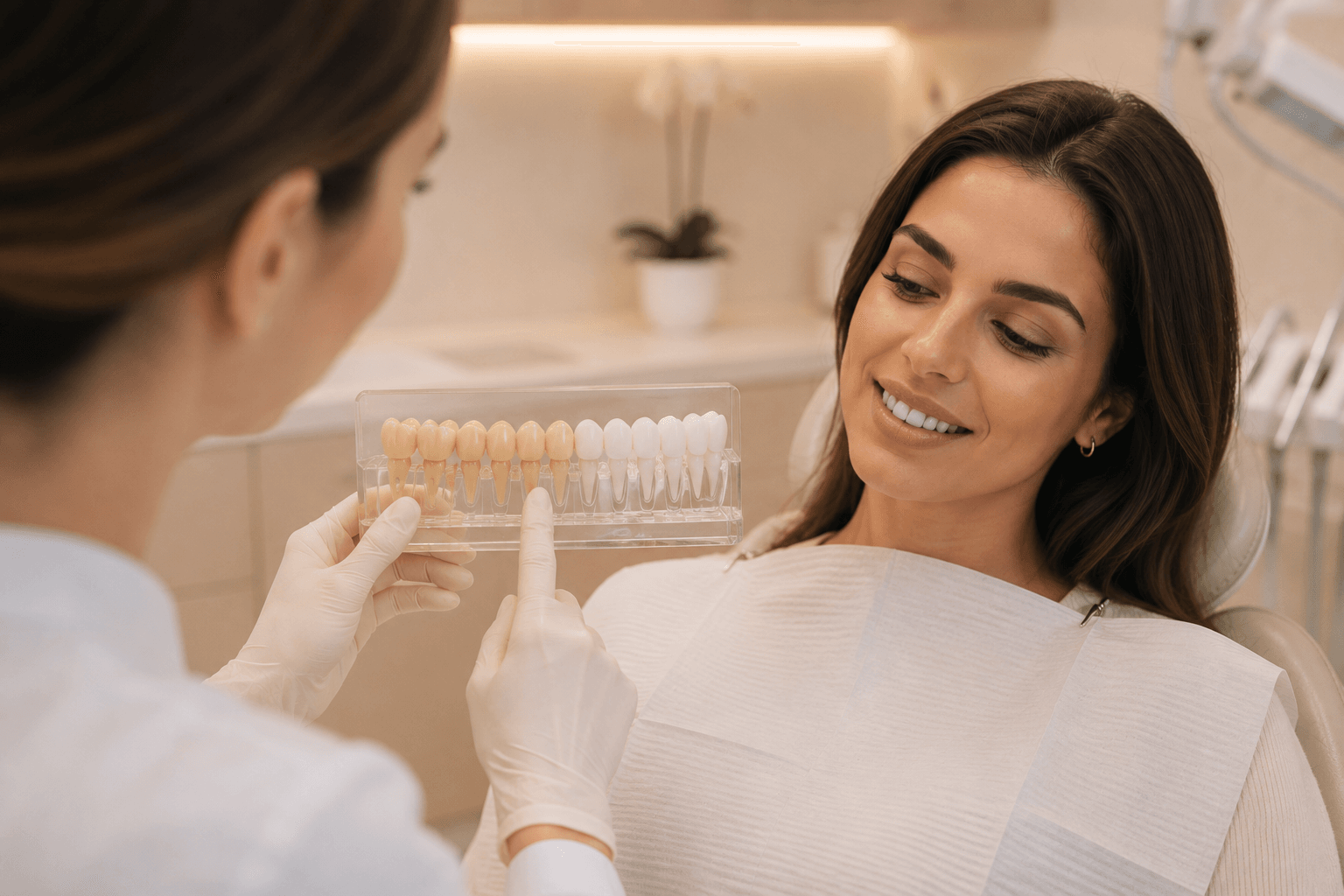
Not all stains are the same, and knowing the difference helps set sensible expectations.
Broadly, staining falls into two types. The first is surface staining — the kind that sits on the outside of the enamel. This comes mainly from food, drink, and smoking, and it's the sort of discolouration that responds especially well to Teeth Whitening. If your teeth have gradually turned yellow or brown from years of coffee, tea, or cigarettes, there's a good chance that a large part of that is surface staining, and lifting it can make a dramatic difference.
The second type sits deeper, within the structure of the tooth itself. This can be caused by things like certain medications taken in childhood, an injury to a tooth, or the natural thinning of enamel with age. Deeper discolouration can still improve, but it sometimes responds a little differently, and a good professional will talk you through what to expect based on what they can actually see.
Most people's teeth show a mixture of both, and that's completely normal. The reassuring reality is that the everyday staining the vast majority of us carry — the coffee, the tea, the wine, the years — is exactly the sort that responds best. It's a large part of why so many before-and-after results look as striking as they do.
What a real before-and-after looks like
Here's the part most people are really here for.
The "before" is usually familiar. Teeth that have dulled over the years to a soft yellow or grey, often unevenly, with the front teeth carrying the heaviest staining because they take the brunt of everything you eat and drink. It rarely happens overnight. Most of us don't notice it creeping in until we catch an old photograph of ourselves and realise, with a slight jolt, how much brighter our smile used to be.
The "after" is the moment that genuinely surprises people. The yellow lifts, the greyness softens, and the teeth look clean, fresh, and clearly lighter — not a fake, blinding white, but the sort of natural brightness you probably had years ago and had slowly forgotten. The shift is often noticeable enough that friends and family can tell something has changed, even if they can't quite put their finger on what it is.
Look closely at any honest set of results and you'll see the same story repeated again and again: teeth that were tired and discoloured, then the very same teeth looking years younger. Same person, same smile, same shape — just without the accumulated build-up of everyday life sitting on top of it.
How to read a before-and-after honestly
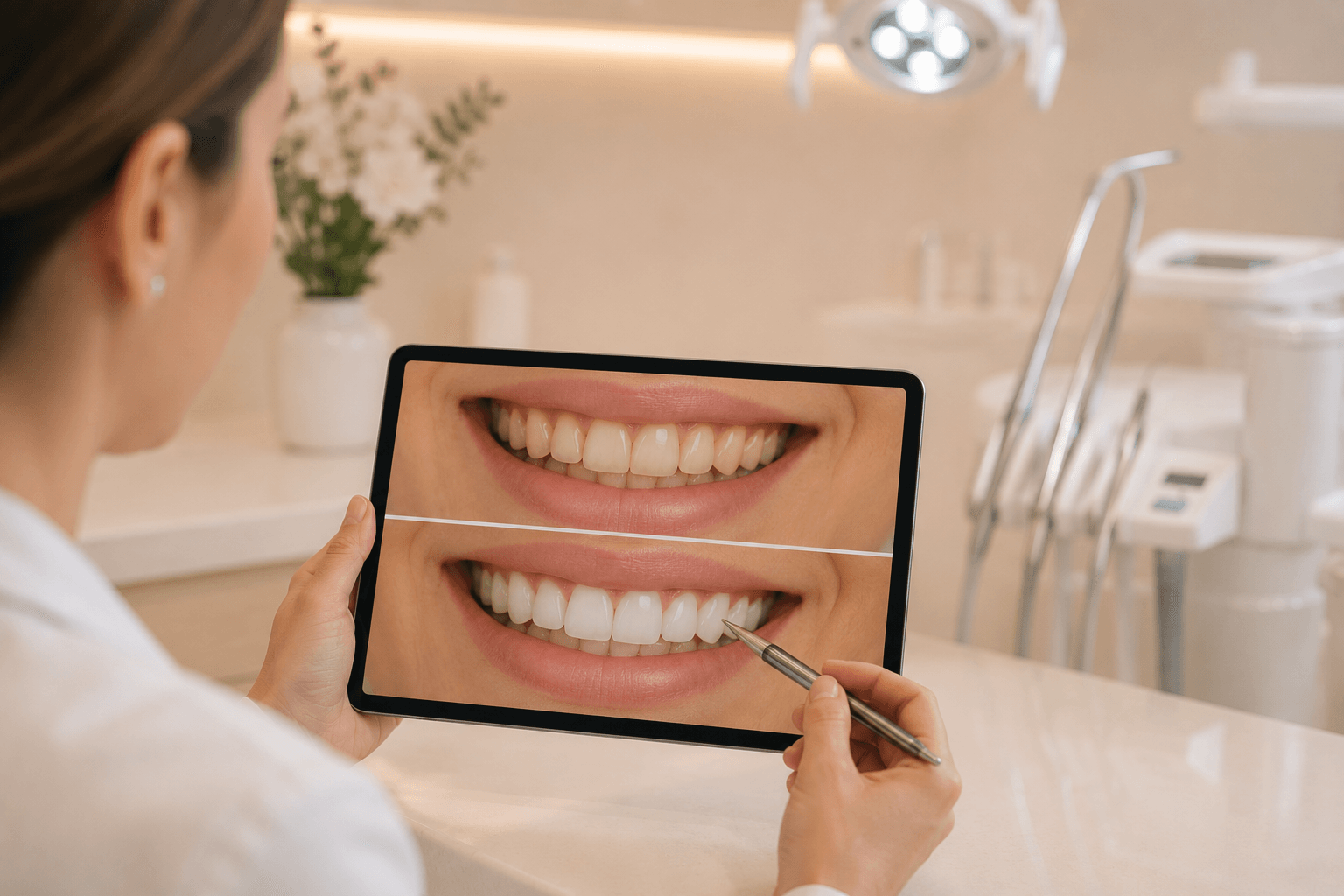
Since you're weighing up whether to trust what you see, it's worth knowing how to look at before-and-after photographs with a clear eye.
A genuine set of results will show the same person, photographed in a consistent way, with the "before" and "after" images matching in angle and framing. The lighting should be even and natural rather than dramatically different between the two shots, because harsh or flattering light can exaggerate a change that isn't really there. Honest photos don't need those tricks.
Look at the whole mouth, not just the front two teeth. A real result brightens the smile evenly, so the teeth towards the sides should lift as well, not only the ones in the centre. Pay attention to how natural the "after" looks, too. The aim of good Teeth Whitening isn't a uniform, unnaturally bright white that looks like a row of tiles — it's a healthy, believable brightness that suits the person's face.
The best before-and-afters are the ordinary ones: real people with real staining, real results, and smiles that still look like theirs. Those are the ones worth paying attention to, and they're the ones that tell you what you can realistically expect for yourself.
Real transformations, case by case
Teeth Whitening results tend to fall into a handful of familiar stories. You may well recognise your own situation in one of them.
The devoted coffee or tea drinker. If your day is punctuated by cups of coffee or endless mugs of tea, you'll know the trade-off well. Those daily drinks are among the most common causes of gradual discolouration, and years of them leave a clear mark. This is exactly the sort of staining the treatment is built to tackle, and the before-and-after difference for regular drinkers is often striking.
The long-term smoker. Smokers often assume their teeth are simply beyond help. The yellowing and darkening that builds up with years of smoking can feel permanent, and it's one of the things people are most self-conscious about. It's also one of the transformations that tends to be most dramatic, lifting layers of build-up and handing people back a smile they'd more or less given up on.
The mature smile. Some people have no single bad habit to blame at all. Their teeth have simply dulled with age — the slow result of thinning enamel and a lifetime of ordinary eating and drinking. If you've looked at a recent photograph and thought your smile doesn't seem as bright as it once did, you fall into this group, and you're often pleasantly surprised by how much of that lost brightness can be brought back.
The special occasion. Weddings, big birthdays, anniversaries, graduations, milestone photographs — these are the moments that push a lot of people to finally do something about their smile. There's nothing quite like knowing you'll be photographed all day to make you conscious of your teeth, and a fresher smile is a common way to feel ready for it.
The wine lover. A glass or two of red in the evening is one of life's small pleasures, but it's also one of the more determined causes of staining. The deep pigments in red wine settle into enamel over time and can leave teeth looking noticeably duller. For regular red wine drinkers, lifting that accumulated colour tends to produce one of the more satisfying before-and-afters, restoring a brightness that the evening glass had quietly worn away.
The client-facing professional. For anyone whose work puts them in front of people all day — sales, presenting, teaching, hospitality, or any role built on first impressions — a confident smile is part of the job. Many people in these roles reach a point where they simply want their smile to match the polished, put-together impression they work hard to give. A brighter smile is a small, quiet change that can make a real difference to how confident you feel walking into a room.
Different starting points, different lives, but the same underlying result: everyday staining lifted away, and a brighter, more confident smile revealed underneath.
Why so many people consider Teeth Whitening
Teeth Whitening isn't really about vanity, whatever people sometimes tell themselves. For most, it comes down to confidence.
Think about how often your smile is on display. Meeting new people. Job interviews. Being introduced to a partner's family. Standing up to speak at work. Every wedding, birthday, and evening out that ends up on somebody's camera roll. When you're happy with your teeth, none of this crosses your mind. When you're not, you catch yourself smiling with your lips pressed together, turning your face away from the lens, or lifting a hand to cover your mouth without even realising you're doing it.
A brighter smile has a quiet way of undoing those small, self-protective habits. People often report the same thing afterwards — that they feel more like themselves, more willing to laugh openly, and far less conscious of how they look in photographs. It's a small change on paper that tends to have an outsized effect on how you carry yourself day to day.
There's a practical side to it as well. A fresher smile makes you look healthier and, frankly, a little younger. It's one of the quickest ways to feel put-together before an important event without changing anything else about your appearance. No new haircut, no new wardrobe — just your own smile, looking the way it used to.
How the treatment actually works
One of the biggest misconceptions about Teeth Whitening is that it must be a long, drawn-out ordeal. For most people, the reality is refreshingly straightforward.
A typical session takes around an hour from start to finish. Your current shade is recorded against the guide, a protective barrier is carefully put in place to shield your gums and lips, and a whitening gel is applied evenly across your teeth. A specialised light is then used to help the gel do its work, gently lifting the staining that has accumulated over the years. There's no drilling, no scraping, and nothing that resembles the more uncomfortable dental work people tend to dread.
The result you see is immediate. You don't head home to wait days or weeks, wondering whether anything is happening. By the time you stand up and look in the mirror, the change is already there in front of you, and your new shade can be compared directly against the reading taken only an hour before.
Because it's quick and low-fuss, plenty of people simply fit it around an ordinary day — a lunch break, a gap between meetings, a spare hour on the way home from work. You arrive with your everyday smile and leave with a noticeably brighter one, then carry on with the rest of your day as normal.
What to expect on the day, step by step
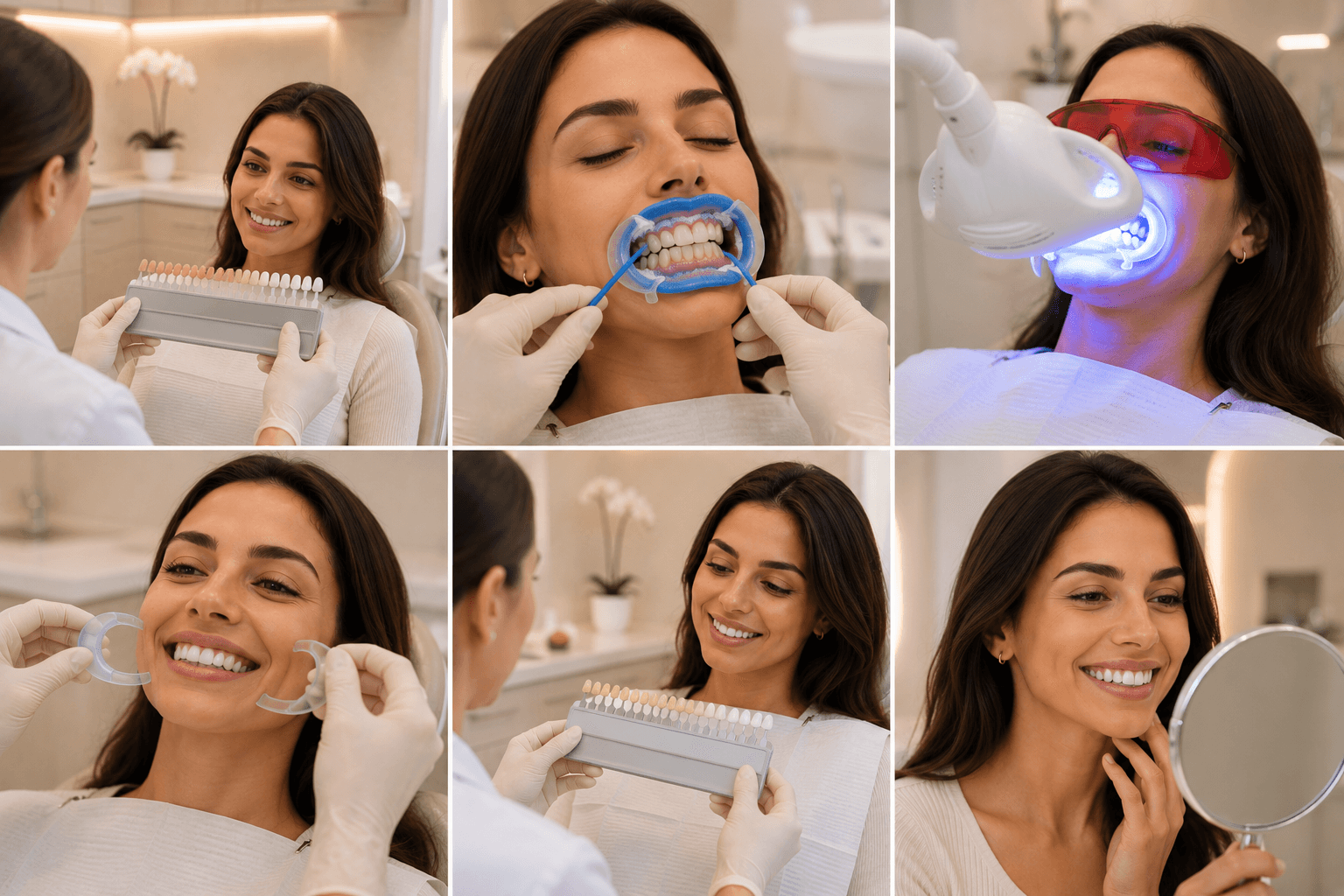
If you like to know exactly what you're walking into, here's how a typical appointment tends to unfold.
First comes a short conversation and a look at your teeth. This is where your current shade is matched against the guide and noted down, and where you can raise any concerns — sensitivity, past dental work, or simply nerves. It's also the moment to ask what sort of result is realistic for your particular teeth.
Next, everything is prepared. Your lips are gently held clear, and a protective barrier is applied to your gums so that the whitening gel only touches the surfaces it's meant to. This step matters, and it's done with care rather than rushed.
Then the gel is applied and the light is positioned. This is the main part of the appointment, and it's also the most relaxing — there's genuinely very little for you to do except sit back and let the process run its course. Many people use the time to close their eyes, listen to something, or simply enjoy an hour of stillness in an otherwise busy week.
Finally, the gel is removed, your teeth are checked, and your new shade is matched against the guide once more. You'll see the before-and-after difference for yourself there and then. After a few simple pieces of aftercare advice, you're free to get on with your day.
Is it safe, and will it hurt?
This is the question that stops a great many people before they even begin, and it deserves a proper, honest answer.
Teeth Whitening, carried out properly, is a gentle and non-invasive treatment. The light used to activate the gel is a harmless one — it's simply there to help the process along, not to damage anything. Your gums and lips are protected throughout, so the gel stays exactly where it's meant to be and nowhere else. Nothing is filed, drilled, or permanently altered; the treatment works with the natural structure of your teeth rather than against it.
The word that worries people most is "sensitivity." If you've ever winced at a cold drink or flinched at a spoonful of ice cream, you'll understand the concern completely. The reassuring news is that the process is designed with comfort in mind, and it suits the vast majority of people — including many who have always thought of themselves as having sensitive teeth. Most feel nothing more than the mild novelty of sitting still for an hour.
If you do have particular worries about your teeth, your gums, or previous dental treatment, the sensible thing is always to mention it beforehand so your treatment can be adjusted to suit you. For most people, though, the reality turns out to be far gentler than the anxiety that came before it.
Managing sensitivity before and after
Since sensitivity is such a common worry, it's worth a little more attention.
Some people do notice a degree of sensitivity after Teeth Whitening — usually mild, and usually short-lived. It tends to feel like a brief, passing twinge with very hot or very cold things, and for most it settles down within a day or so rather than lingering.
There are simple ways to keep it to a minimum. Using a toothpaste made for sensitive teeth in the days leading up to and following your appointment can help. So can steering clear of very hot and very cold foods and drinks for the first day, giving your teeth a gentle window in which to settle. If you already know your teeth are on the sensitive side, saying so before you begin means the treatment can be approached with that in mind from the very start.
None of this changes the result you see on the day. It's simply about making the whole experience as comfortable as possible, both during your appointment and in the hours that follow. For the majority of people, sensitivity is a minor footnote rather than anything to be genuinely concerned about.
What Teeth Whitening can and can't do
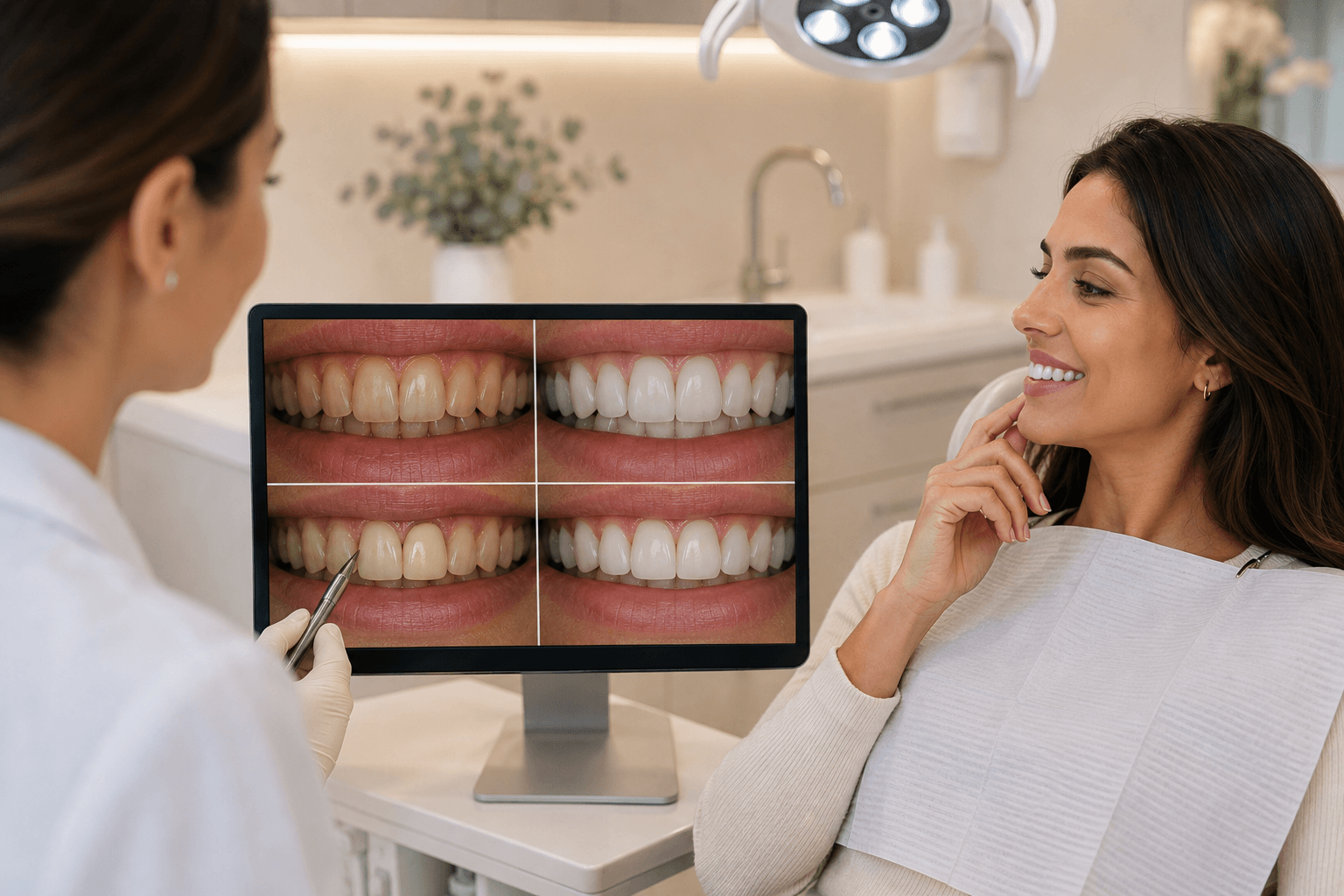
Honest expectations make for happy results, so it's worth being clear about the limits as well as the possibilities.
Teeth Whitening works on your natural teeth. It lifts staining from enamel and restores brightness that's been dulled by food, drink, smoking, and age. On that natural staining, it can be genuinely transformative, which is exactly what the before-and-after photographs show.
What it doesn't do is change the colour of artificial dental work. Crowns, veneers, bridges, and fillings don't respond to whitening the way natural enamel does, because they're made from different materials. If you have visible dental work at the front of your mouth, it will stay the shade it already is. This is worth knowing in advance, because it occasionally means the natural teeth around a crown or filling end up looking brighter than the artificial one — and a professional will point this out and talk you through it beforehand.
It's also worth remembering that everyone's teeth start from a different place and respond in their own way, so results naturally vary from person to person. The aim is always a brighter, healthier-looking smile that suits you, not an identical outcome for everybody. Going in with clear, realistic expectations is the surest route to being genuinely delighted with the result.
Who tends to benefit the most
Teeth Whitening suits a wide range of people, but a few groups tend to see especially satisfying results — largely because they're the ones carrying the most everyday staining.
Regular coffee and tea drinkers are near the top of the list. The gradual, set-in discolouration that comes from years of daily cups is precisely the sort the treatment is built to tackle, and the difference is often striking.
Smokers, too, tend to see dramatic change. The stubborn yellow-brown build-up that smoking leaves behind is one of the transformations people notice most, and it frequently gives back a smile they'd assumed was gone for good.
Then there are those whose teeth have simply dulled with time. No single cause, no bad habit — just the slow accumulation of an ordinary life. This group is often the most pleasantly surprised of all, because they hadn't realised quite how much brightness had quietly slipped away until they saw it restored.
And finally, anyone with an event on the horizon — a wedding, a big birthday, a reunion, an important set of photographs — tends to find the timing especially rewarding. There's real satisfaction in walking into a milestone moment feeling completely happy with your smile.
When is the best time to whiten?
There's no single right moment for Teeth Whitening, but a few occasions come up more than most.
The obvious one is ahead of a big event. Weddings, anniversaries, graduations, milestone birthdays, and any occasion that involves a lot of photographs are common prompts, and it makes sense to plan a little ahead so your smile is exactly where you want it on the day rather than leaving it to the last minute.
Beyond events, plenty of people simply reach a point where they've had enough of hiding their smile. Perhaps an old photo brought it home, or a comment stuck, or they've just grown tired of the closed-lipped smile in every group picture. There doesn't need to be a special occasion at all — feeling ready is reason enough.
It's also worth thinking about timing around your habits. If you're planning to cut down on coffee or give up smoking, whitening afterwards can feel like a genuine fresh start, and your results are likely to last longer once the heaviest staining sources are behind you. Whenever you choose, the important thing is simply that it's the right time for you.
Getting the best possible result
A little preparation goes a long way towards a result you'll be thrilled with.
The most useful thing you can do is be open about your teeth from the start. Mention any sensitivity, any dental work, and any particular hopes you have, so that your treatment can be tailored and your expectations set sensibly. A good professional would far rather have that conversation upfront than leave you guessing.
It also helps to give your teeth a clean, healthy starting point. Whitening works best on teeth that are already free of surface debris, so keeping up a good brushing and general oral care routine in the run-up is genuinely worthwhile. If you're due a routine dental check, it's sensible to make sure your teeth and gums are in good shape before whitening rather than after.
Beyond that, simply go in with a clear idea of what you're hoping for and an open mind about the outcome. The people who come away happiest are usually those who understood what to expect, prepared their teeth well, and were realistic about their own starting point. Do those few things, and you give yourself the very best chance of a striking before-and-after of your own.
How long your results last
A brighter smile isn't a fleeting stroke of luck that vanishes overnight, but it isn't permanent either — and it helps to hold realistic expectations.
Once you've had your teeth whitened, the fresh shade you leave with is genuinely yours to enjoy for a good while. What decides how long it lasts is, in large part, the very thing that caused the staining in the first place: everyday life. Go straight back to several coffees a day, red wine most evenings, or regular cigarettes, and the brightness will naturally begin to fade sooner. Ease off the worst offenders, keep up a solid brushing routine, and your results will hold on considerably longer.
Plenty of people find that a straightforward daily routine is enough to keep their smile looking good for a long stretch, with the occasional top-up further down the line if they want to bring it back to its very brightest. None of that changes what you see on the day, though. The before-and-after is real and immediate the moment you leave the chair. It's simply worth understanding that a little care afterwards makes that result last, and that the longevity is, to a large degree, in your own hands.
Aftercare: protecting your new smile

The first day or two after Teeth Whitening is when a little care pays the biggest dividends.
Immediately after treatment, your teeth are at their most receptive to colour, which means they can pick up new staining more easily than usual for a short window. This is where the well-known advice to follow a "white diet" for the first day or so comes in. In practice, that means steering clear of the obvious staining culprits for a while — coffee, tea, red wine, dark sauces, richly coloured fruits, and anything with strong colouring. Sticking to paler foods and drinks such as water, plain chicken, rice, pasta, and the like during that short window helps your new shade settle without interference.
Smoking is best avoided during this period too, for the same reason. The initial hours are when fresh staining takes hold most readily, and giving your teeth a clear run makes a real difference to how well your results hold up.
Beyond the first day, ordinary good habits carry your smile a long way. Brushing well, keeping up with your general oral care, and being a little mindful of the heaviest-staining foods and drinks will all help your brighter smile last. None of it is complicated. A short stretch of care immediately afterwards, followed by sensible everyday habits, is all it really takes to protect the result you can see in the mirror.
Teeth Whitening versus home and shop-bought options
A lot of people have tried a home approach before looking into professional treatment, so it's a fair comparison to make.
Shop-bought whitening toothpastes, strips, and kits are widely available, and they do have their place. Whitening toothpaste, for instance, can help keep surface staining at bay as part of a daily routine. Where these options tend to fall short is in the scale of the change they can achieve. They generally work slowly, often over weeks, and the results are usually subtle compared with the visible, measured shift you see from a single professional session. If you'd like to browse common questions and answers, you can visit LA Teeth Whitening coventry FAQs.
There's also the matter of evenness and care. Applying a product yourself at home makes it harder to treat every tooth uniformly, and there's nobody there to protect your gums or check how your teeth are responding along the way. A professional setting brings a trained eye, proper protection for your gums and lips, and a result recorded against a recognised shade guide so you can actually see the difference you've achieved.
None of this means home products are worthless — for gentle upkeep between treatments, they can be genuinely useful. But when people compare the two side by side, the appeal of the professional approach tends to be the same: a bigger, clearer, more reliable change, achieved comfortably in about an hour, with someone experienced looking after the details.
Common questions about Teeth Whitening results
A few questions come up again and again. Here are honest answers to the ones people ask most.
Will my teeth look natural, or obviously fake?
The aim is a natural, healthy brightness rather than a uniform, artificial white. Done well, your teeth simply look like a fresher version of your own, not like a row of tiles.
How quickly will I see a difference?
Straight away. Unlike home approaches that take weeks, a professional session shows its result on the day, and you can compare your new shade against your original one before you leave.
Is the change permanent?
No treatment lasts forever, because everyday food, drink, and habits gradually reintroduce staining. With sensible care and the occasional top-up, though, your results can last a good long while.
Does it damage your enamel?
Carried out properly, it's a non-invasive process that works with your teeth rather than harming them. Nothing is drilled or filed, and your gums are protected throughout.
Will it work on my particular teeth?
For most everyday staining from coffee, tea, smoking, and age, yes — that's exactly what responds best. The honest way to know what to expect for your teeth specifically is to have a professional take a proper look.
Can I have Teeth Whitening if I have sensitive teeth?
In most cases, yes. The process is designed to be comfortable, and many people with sensitive teeth get on perfectly well with it. Mentioning your sensitivity beforehand means it can be taken into account from the very start.
How often can I have it done?
It isn't something that needs repeating constantly. Many people are happy with a single treatment and an occasional top-up further down the line. The right frequency depends on your teeth and your lifestyle, and a professional can advise on what suits you.
Is there an age limit?
It's a treatment aimed at adults, and it tends to be especially popular with people whose teeth have naturally dulled over the years. If you're unsure whether it's right for you, a quick professional assessment will give you a clear answer.
Myths and facts about Teeth Whitening
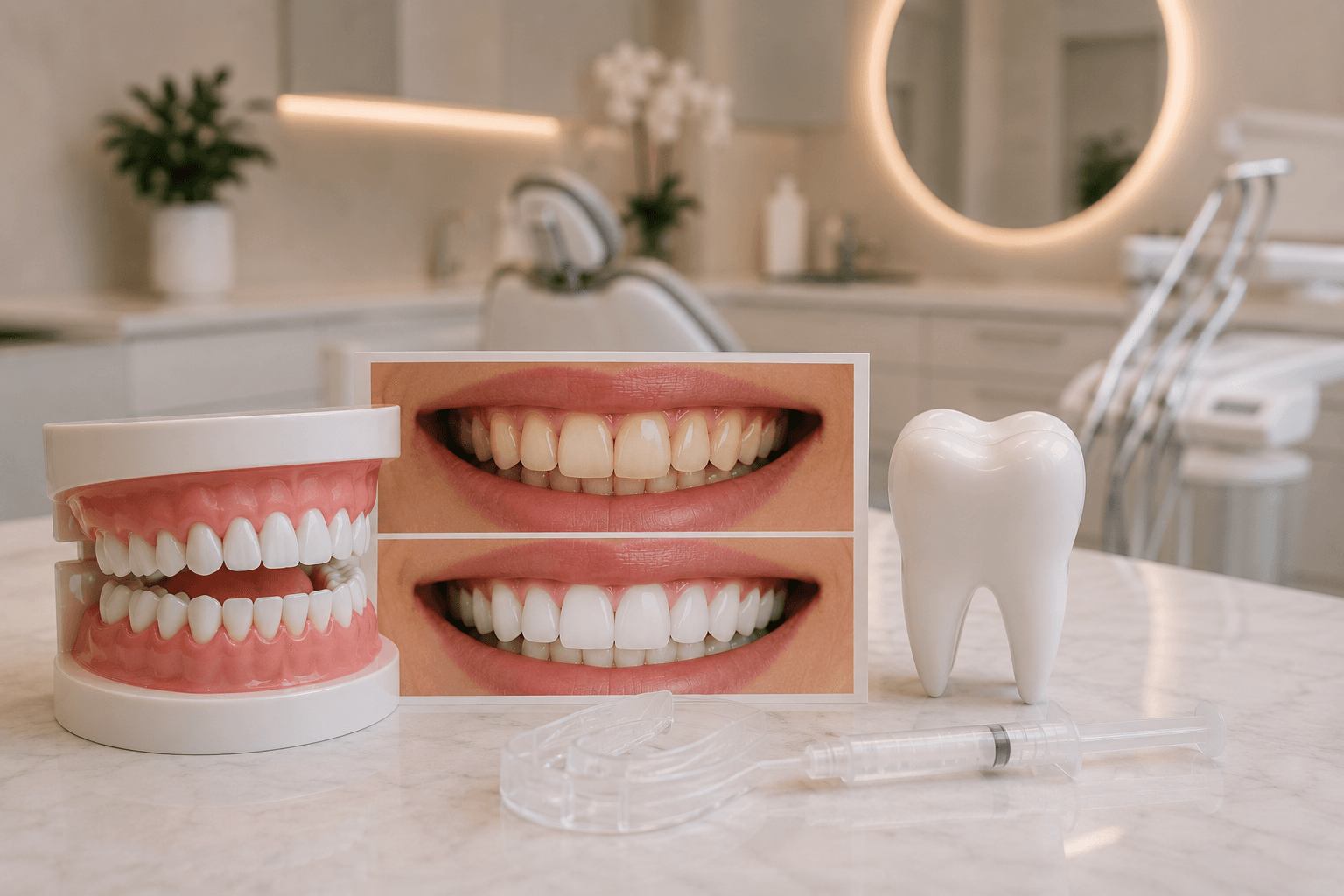
Plenty of half-truths float around about Teeth Whitening. It's worth clearing up a few of the most common ones.
Myth: whitening ruins your enamel. In reality, a properly carried out treatment is gentle and non-invasive. It lifts staining without filing, drilling, or permanently altering the structure of your teeth.
Myth: results always look fake. Done well, the aim is a believable, natural brightness that suits your face, not a blinding, uniform white. The most flattering results are the ones that still look like your own smile.
Myth: it's unbearably painful. For the vast majority of people, the experience is comfortable, with at most a little short-lived sensitivity afterwards. The dread beforehand is almost always worse than the reality.
Myth: whitening toothpaste does exactly the same job. Whitening toothpaste can help manage surface staining over time, but it can't match the visible, measured shift of a professional session. It's useful for upkeep, not for a dramatic before-and-after.
Myth: it works on crowns and veneers too. Artificial dental work doesn't change colour the way natural enamel does. Whitening restores the brightness of your natural teeth, which is exactly why an honest assessment beforehand matters.
Picture your own result
By now you've seen what the change looks like, how it's measured, what causes the staining, how the treatment is carried out, and who tends to benefit most. So the only question left is a personal one: what would your own before-and-after look like?
It's worth sitting with that for a moment. Imagine catching sight of your smile in a mirror or a photograph and, for once, not flinching. Imagine laughing at a dinner without a second thought, or being handed a camera without instinctively pressing your lips together. That's really what Teeth Whitening offers — not a different face, just a fresher, more confident version of the one you already have.
There's no rush and no pressure. Take your time, look back over the results as often as you like, and picture your own teeth in place of the ones you've seen described here. When you feel ready to find out what's genuinely possible for your smile, the natural next step is simply to have an honest conversation with a professional who can look at your teeth and tell you what to expect.
Your brighter smile has been there all along, sitting quietly underneath the staining of everyday life. Teeth Whitening is just the process of bringing it back into the light.